My
Three Year Journey From,
Towards
and With Religion
“Your daily life is your temple and your religion”-
Kahlil Gibran: The Prophet
“The people of God say, ‘There are as many ways to God
as the breaths of the creatures’ and every breath emanates from the heart
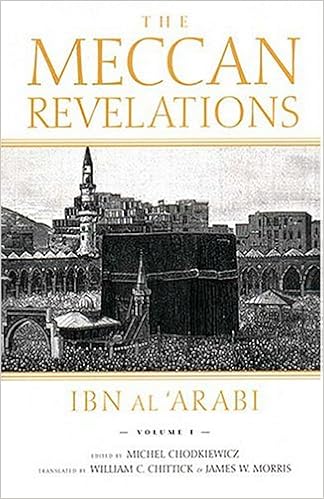
according to the belief the heart has of God”- Ibn ‘Arabi: The Meccan
Revelations (III. 411. 22)
“Faith makes us, and not we it, and faith makes its
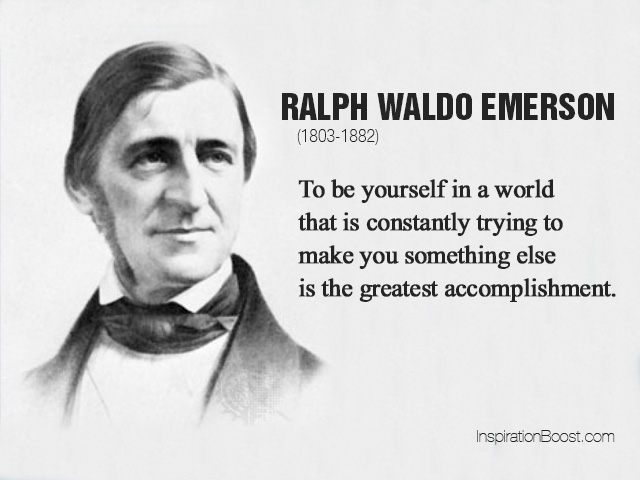
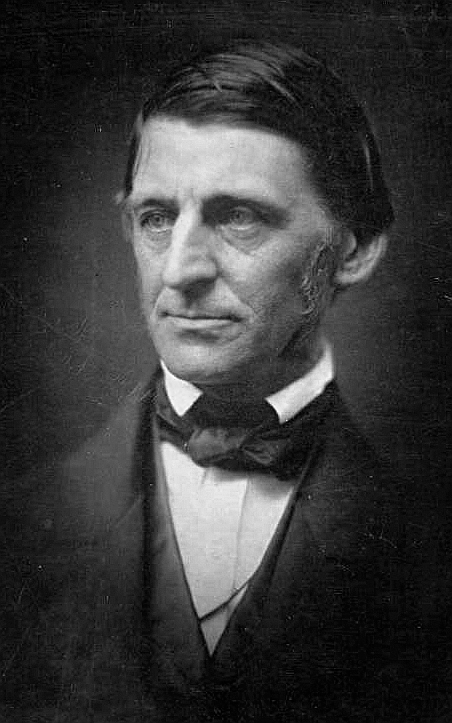
own forms”- Ralph Waldo Emerson: An Address (Harvard Divinity School)
Three
years ago on August 8th at 12:45 am, I was holding a cross in tears,
begging for God to come into my life and to forgive me for the sins which I committed.
I was praying to a God I didn’t believe in, had no love for and as a half
aggressive atheist and semi-curious agnostic, desperately wanted to believe in.
I was too blind to see that God was with me from the beginning. Too blind even
to notice, I already knew and loved God. But
God has a journey for us all, and He won’t completely Unveil Himself, until He
feels we are ready to witness The Truth in all of its omnipresent glory. I had
so much to learn.
When
God came into my life, I kept journals, recording my excitements and questions,
and wrote down as many passages as I could from books I read. For the first
year, I spent time studying western philosophy (ancient and modern) and going
deeper into world’s religions than I did back in my atheistic days. It was
actually a couple weeks after finding God that I discovered The Perennial
Philosophy, or the view that all the world’s religions are true and that they
come from God’s ever-flowing compassion for humanity. I listened to a lecture
given by James S. Cutsinger available on YouTube called, “The Noble Lie”, and I
was dumb-struck. I thence forth prepared myself to read the works of
Traditionalist’s like Frithjof Schuon and Rene Guenon by having a solid
education in the world’s religions. It was Frithjof Schuon’s views which
completely transformed my life and brought an awful amount of peace to my ever
questioning mind. But that peace was broken at different moments, by something
I didn’t have the ability to articulate at the time. Retrospectively, it was as
follows:
Is Modernity
that evil? Are the world’s religions that necessary to follow when so many religious
authorities with their superficial obsession with legality and literalism, are
driving people away from God? And finally and most importantly, are the
Traditionalists who think you must follow a religion to be saved and or
Awakened, strangling and suppressing the
omnipresent compassion of God, by limiting His salvific activity to the
intuitional crystallizations of God’s, “… eternal revelation in the heart”(
Emerson, “Harvard Address) ?
This, “eternal revelation
in the heart” which the American poetic- philosopher describes, is either
denied by or hidden to, Traditionalist’s such as Frithjof Schuon. Yes, Schuon
shows that all religions speak about the Heart or Intellect (not reason) as
being the place where we Re-member the innate Wisdom which we lost and the
place where God knows Himself in us. But because this self-knowing of God in us
is always happening- if it weren’t, we
wouldn’t exist- and that everything around us in the cosmos is a
manifestation of God’s Names/Archetypes which both Veil and yet Point to God…
we are so so mistaken to think that we need a religious- institution to commune
with God. If each religion is a Path revealed by God and every beautiful form
in creation a symbol pointing to God… we are and in fact everything is,
Religion. Where is Religion not?

Returning to my journey,
being disgusted by The Traditionalist’s superficiality during the summer a year
after my conversion to theism, I fell into despair for a while and abandoned my
study of religion and philosophy. I tried numbing and distracting myself by
pouring into the literature of the world. I discovered writers such as Hermann
Hesse, Charles Baudelaire, Sylvia Plath, Goethe, Jorge Luis Borges, Guy de
Maupassant, Moliere and others, and re-waken my love for poetry, relishing
poets like William Wordsworth, John Keats, Walt Whitman, Edgar Allen Poe and
Alexander Pushkin.

I have read more
than two-hundred novels, plays and collections of short stories and poems, for
that year. It didn’t occur to me how remarkably connected my interests in
fiction, philosophy and religion were, simply because God never provided me
yet, with the right writers and experiences which would eventually help me see clearly. To me,
literature was my religion. I tried writing blogs about how Culture may be in
fact, our new Religion in this Modern Age, but I lacked the proper means to explain it.
Even though I meditated
from time to time under the inspiration of Alan Watts and Zen Buddhism in
general, I felt the tension between Modernity and Traditional growing up in me:
not just from my readings, but from the memories of women I dated who were
either enslaved by or dedicated to, the traditional- religious views of their
parents and yet who were also very modernized and felt the urge to spread their
wings and fly-free. They were reflections of my own inner conflicts, and they
were also microcosms of society in general, with the divide between liberal and
conservative- minded people. How was I to solve this endless dialectic, this
circular nightmare? It seemed the problem just got worse, and yet better now
that I look back.
Without mentioning names,
that year of reading literature ended when I dated a Muslim girl who for all
intents and purposes, was a mystic who was both traditional and modern. Her
interest in my blogs, filled with my foolish attempts to artificially create a
balance between modernity and tradition, attracted her and I suppose God provides
people in our life to guide us to something which is Beyond us, and yet Within
us. When we parted, she left me with the inspiration to fall more deeply in
love with God and both fortunately and unfortunately… take the Traditionalists
more seriously. As some of my old blogs may show, I became a Muslim and
practiced Islam as much as I could, diving into Sufism and falling in love with
Rumi and Haviz…until the same old conflict arose again (see, “My Inner Jihad between
Islam and Modernity”: http://7perennialreflections.blogspot.com/2015/12/my-inner-jihad-between-islam-and.html).
The December of last
year, I thought, ‘This is it, no more restlessness’. I re-read some of things
that Frithjof Schuon had to say about Christianity, and I was hooked by Christ:
I had to return to He who I called out in the beginning, who saved my life and
started this mess in the first place. I soon started attending catechism
classes for Catholicism, only to leave and find certain outward issues which
thinking back, were not legitimate reasons for leaving the Catholic church. Yet
I left for what I thought to be Christianity in its most ‘pure-form’:
the Orthodox church. Discovering the Jesus Prayer and the intrinsic-mystical
aspects of the Orthodox Church, I was eager to become a member . Despite having
very moving memories in Church with my father…the war between modernity and
tradition continued: to follow a religion or not to? As this war pressed on,
God was sending Messengers, theophanies in my prayers and outwardly in my life
which involved conversations with my father, my doctor, an old philosophy
professor and a close Sufi friend. All of these people were saying the same
thing: there are many paths to God as there are souls on earth. But a number of
writers I returned to and some I discovered, ultimately pushed me further into
my destiny, where I was right from the beginning.

Joseph Campbell, Dante,
Abu Bakr Ibn Tufail (“Alive Son of Awake”), John Caputo (“On Religion”), Paulo
Coelho, Walt Whitman, Nikos Kazantzakis, Kahlil Gibran and especially Ibn
‘Arabi and Ralph Waldo Emerson, were the ones that helped me immensely. They
addressed the questions I had and helped me see how the Truth in- Itself which
was spoken clearly by Frithjof Schuon, manifests within every soul and in every
possible circumstance and perspective. Ibn ‘Arabi is The King, the Sheikh al-
Akbar (“Greatest Teacher”) who among other things, talked a great deal about
how God’s compassion is so immense, it touches not just those in Heaven, but
even those in Hell, making the ‘sinners’ their suffer only for a short time. Their
suffering is only for the sake of correcting a mistake and since nothing else
exists in the end except God and evil is merely the lack of Good- which is
God-, the pain experienced in Hell is temporally: to push further, punishment
is only for the sake of purification, so that God’s Felicity- which is
experienced by those naturally in Heaven- can enter the sinners soul.
As the greatest teacher
explains, “After mercy has embraced them, the people of Fire will find their
joy in the Fire, and they will praise God
for their not being in the Garden” (Meccan Revelations, IV 14.34). Why will
those in Hell praise God for not being in Heaven? Because, all humans are made
of different constitutions and cannot perceive or experience God under the same
form as a person ‘higher’ or ‘lower’ than them. Yes, we are all made in the
Image of God- in other words, having an Intellect/Heart- but just as The Hindu
tradition discusses the three paths to God which each individual tends to
gravitate towards- bhakti/love, jnana/wisdom and karma/virtue yoga- and that
the three western monotheistic religions emphasize one of these paths… each
individual requires a particular Form or Path which addresses each souls
particular strengths and weaknesses. But what about this talk about Heaven and
Hell? Are we stranded in this life and, aren’t these descriptions of the
afterlife just fanciful and human justifications for religious cruelty? Quite
the contrary.
 |
| Ibn Arabi |
As mystics in all
religions from Meister Eckhart, Rumi and Kabir teach, “…the kingdom of heaven
is within you” (Luke 17: 21) and as Dante’ Divine Comedy suggests, Hell must be
experienced if one desires to become One with God in this life. What about these
post-mortem descriptions? What has to be said about the afterlife, equally has
to be said for all miracles and theophanies of God, by virtue that the Kingdom
of Heaven is within. As it shows up in William Blake, Dante, Emmanuel
Swedenborg, J.R.R Tolkien, Emerson and especially in Ibn ‘Arabi, there is in
between The Intellect/Heart and reason, what Henry Corbin called the, ‘Mundus
Imaginalis’ or imaginal realm. Rather than being merely the unconscious
fantasies of the ego, this is where Spirit and Matter overlap and bridge. It is
at once the world-soul, The Universal Man/Human as well as Heaven and Hell.
Excessed through dreams and meditation- and experienced by all when bodily
death occurs- we enter a Placeless Place where the connection between earthly
objects are more apparent and unity more evident. And yet, as William C.
Chittick explains about Ibn ‘Arabi’s thought, “Not only do people construct
their own paradises; they also construct their own hells” (Imaginal Worlds,
109). Like a lucid dream, we can create our surroundings in Heaven or Hell
through our desires alone. How can this be!
Henry Corbin explains that,
“… God has created for each soul a universe corresponding to that soul. When
the mystic contemplates this universe, it is himself...that he is contemplating:
(“Spiritual Body and Celestial Earth”, 82). As the Imaginal Realm at large is
the World- Soul, so branching out from the World-Soul, are Heavens and Hells,
constructed to each soul’s unique characteristics. It is this teaching of Ibn
Arabi which allows this democratic and modern perennial philosophy, to
take shape.

Ralph Waldo Emerson
himself makes the distinction between Imagination and phantasy- as Ibn Arabi- in
the following essay and gives a beautiful account of what poetry is: “Poetry is
the perpetual endeavor to express the spirit of the thing…to see that the
object is always flowing away, whilst the Spirit or necessity which causes it
subsists (“Poetry and Imagination”). Describing Shakespeare’s work, Emerson
says the wonderful characters in his plays are, “… swarm of fit thoughts and images,
as if Shakespeare had known and reported the men, instead of inventing them at
his desk.” (“Poetry and Imagination”). In other words, despite colored by an
historical context, we see each individual astrological archetype in Shakespeare’s
plays, emanating and subsisting in the Imaginal Realm via the World-Soul. Any art
form which touches upon the universal spiritual and personality types of
Humans- and thereby the cosmos as a whole, since Man is a microcosm of it- can
be considered Treasure from the Realm. J.R.R Tolkien interestingly enough makes
the same distinction as Emerson and Ibn Arabi between Imagination and fancy,
but with a unique point which brings him even closer to these two geniuses.
Despite the fact that there
is a distinction between Imagination/Imaginal Realm and fantasy, it is really, “a
difference of degree…not a difference in kind” (“On Fairy Tales”). And the best
way to get a sense of what he means, is to look at Tolkien’s Lord of The Rings
series as a whole: they are built with fantastic and adventurous events for sure,
but because Tolkien goes to great depth to describe the economical-systems, the
geography, language, history and culture in general of Middle- Earth, Tolkien’s
keen perception was as just as much a Record of actual events in the Imaginal
Realm as are Shakespeare’s characters. Much can be said about this concerning
all the great classic writers and poets, but the main point that Tolkien makes
is that, phantasy as Sub- Creation or a microcosm of God’s constant creation of
the world, allows us to commune with our own Imaginal Realm, whose living and
breathing symbols point at once to unique qualities of our own soul, and yet
point to all souls and the cosmos as a whole.

This allows our view of
Religion to increase to its greatest expanses: Religion is not just a institutional manifestation, but each and every soul which participates with God whether
knowingly or not, surrounded with his or her unique environment and daily activities.
Emerson himself makes the point: “Religion or worship is the attitude of those
who see this unity, intimacy, and sincerity; who see that, against all
appearances, the nature of things work for truth and right forever” (“Worship:
Conduct of Life”). And it all goes back to the insight of Ibn ‘Arabi that, each
soul requires a particular perspective of God/Reality which matches their
disposition so that they may be saved. Even though God himself is beyond
all forms and beliefs concerning Himself/Reality, any belief which is held by
anybody is revealed by Him, by the fact that anything which does exist, subsists
in God: All is due to God’s universal compassion for us limited creatures:
“The doctrines are
diverse because of the diversity of the views of those who view Him. Every
viewer worships and believes only what he himself has brought into existence in
his own heart. He brings into existence in his heart nothing but a created
thing. That is not the Real God. Yet in
that doctrinal form He [God] discloses Himself to him” (Meccan Revelations,
IV 211. 30).
These are the things I
felt before I started believing in God. I sensed through my life long love for poetry and Nature, that Nature in Herself
discloses Symbolic and poetic secrets inwardly in the Hearts of those who are receptive and outwardly in the many forms of the cosmos. And that these secrets
were not merely human fancies, but affinities which eternally exist between Man
and God/Nature.
The Truth is as intimate and accessible to us as our breath. Any individual that loves, “has been born of God and knows God” (1 John 4:7) and regardless of our belief or non-belief in God, “…there are none of the myriad things who do not venerate the Tao or esteem its value. This veneration of the Tao and esteeming of its virtue is something they do naturally, without being forced” (Tao Te Ching, 51). No Traditionalist and no religious authority can tell us that we must join a religious institution or to believe in God or other sacred doctrines: It is in our nature to Worship and Glorify God, and we cannot rebel from our nature.
The Truth is as intimate and accessible to us as our breath. Any individual that loves, “has been born of God and knows God” (1 John 4:7) and regardless of our belief or non-belief in God, “…there are none of the myriad things who do not venerate the Tao or esteem its value. This veneration of the Tao and esteeming of its virtue is something they do naturally, without being forced” (Tao Te Ching, 51). No Traditionalist and no religious authority can tell us that we must join a religious institution or to believe in God or other sacred doctrines: It is in our nature to Worship and Glorify God, and we cannot rebel from our nature.

I felt passionate and yet insecure about these things as a young and unexperienced believer in God three years ago because, I had no
way to verify them, neither inwardly through prayer nor outwardly through
reading or experience. I had to sift through so many motives for whether to
join or not join a religion and as I got further, the motives became more and
more pure.
I have no regrets for having gone on this journey.
It truly was a return to where I was right from the start and only bewilderment, confusion and restlessness could help me be aware and secure in my soul. The Flower was
present, just beaming with excitement while it was within its Seed, and yet it
required for three years the Watering of sweat and tears and the un-hardening
of the Soil in my Heart/Intellect, for it to fully grow. And this reflection
was its Bloom.
It is my destiny to write
about Ralph Waldo Emerson’s perspective about religion, while using the grand
mystical, metaphysical and Imaginative insights of Ibn Arabi. Both writers
arrived in my life and made sense at the right time because of their
universality and all-embracing view of God/Reality. I pray that the future
blogs I plan to write concerning these two fellows- and others as well- will
ignite your soul with the comfort that, you must always be on the right path
and already at The Destination, just to exist.
May we savor these words
of Ralph Waldo Emerson not because they were spoken by him, but because we may feel
as if we have said them long ago:
“All writing comes by the grace of God, and
all doing and having”-Experience
“Under all this running
sea of circumstance, whose waters ebb and flow with perfect balance, lies the
aboriginal abyss of real Being. Essence, or God, is not a relation or a part,
but the whole”- Compensation
“Poetry was all written before
time was…”- The Poet
“In every work of genius we recognize our own
rejected thoughts; they come back to us with a certain alienated majesty”-
Self- Reliance
“There is one mind common
to all individual men”- History
“In your metaphysics you
have denied personality to the Deity, yet when the devout motions of the soul
come, yield to them heart and life, though they should clothe God with shape
and form”- Self- Reliance
“When the voice of a
prophet out of the deeps of antiquity merely echoes to him a sentiment of his
infancy, a prayer of his youth, he then pierces to the truth through all the
confusion of tradition and the caricature of institutions”- History